
Journals
-
Indonesian Journal of Ethnomathematics
Indonesian Journal of Ethnomathematics is a scientific, peer-reviewed, and open-access journal which has been established for the dissemination of state-of-the-art knowledge in the field of Ethnomathematics and Value in Mathematics Education. It is the study of the relationship between mathematics and culture. In a deeper understanding, ethnomathematics refers to mathematics which is practiced by members of a cultural group who share similar experiences and practices with the mathematics that can be in a unique form. Culture gives diverse and interesting contexts in mathematics learning to be discussed. Therefore, the scope of ethnomathematics and value in mathematics education are an important part of the focus and scope of the journal. The ideas of this research on related topics can be traced to the works of Marcia Ascher, Ubiratan d'Ambrosio, Robert Ascher, Marcelo C. Borba, Alan Bishop, Philip Clarkson, Wee Tiong Seah, Jeong Suk Pang, and published books in Springer, Taylor & Francis, or other publishers. Lastly, This journal managed and published by the Indonesian Mathematics Educators Society. The manuscript must be original research, written in English, and not be simultaneously submitted to another journal or conference.
Journal Information
Journal title : Indonesian Journal of Ethnomathematics Initials : IJE Abbreviation : Indonesian. J. Ethnomathematics Frequency : 2 issues per year DOI : 10.48135 by 
Print ISSN : Online ISSN : 2775-8001 Editor-in-chief : Prof. Dr. Rully Charitas Indra Prahmana Managing Editor : Prof. Dr. Wahyu Hidayat Publisher : Indonesian Mathematics Educators' Society (IMES) Citation Analysis : Scopus | Sinta | Google Scholar | Dimensions | DOAJ
Editorial Process
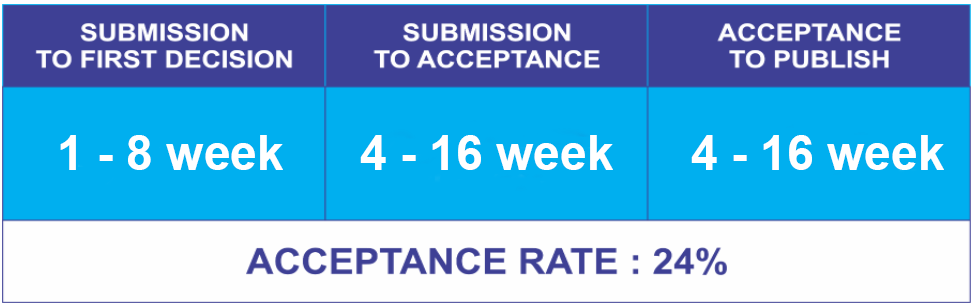
Before Submission
The author has to ensure the manuscript has been prepared using IJE Template following the author guidelines. The single author's paper is just for the invited author or the author with a great reputation for research or publication in mathematics education. The manuscript should also have been carefully proofread and similarity checked (the proofreading certificate and similarity check result must be attached as a supplementary file in the submission process). Apart from that, the author must also attach an Authorship Form signed by all authors (Download Authorship Form).
Any manuscript which does not meet the author's guidelines, focus, and scope, is written in a different format, or has poor soundness of English will be immediately rejected. The only manuscript which meets the Infinity standard will be processed further.
Registration and login are required to submit items online and check current submissions' status. -
Journal of Advanced, Basic, and Applied Research in Mathematics Education
The Journal of Advanced, Basic, and Applied Research in Mathematics Education is a reputable international scientific journal that employs a double-blind peer review system and specializes in the study of mathematics learning and teaching. The journal is dedicated to publishing high-quality research articles that contribute to the advancement of knowledge regarding how individuals construct, retain, communicate, apply, and comprehend mathematical concepts in diverse contexts.
The Journal of Advanced, Basic, and Applied Research in Mathematics Education accepts theoretical and empirical research articles utilizing a range of methodological approaches and research paradigms. Its scope encompasses mathematics learning and teaching across all age groups and educational levels, both formal and informal, including but not limited to primary, secondary, and higher education, as well as lifelong learning.
The Journal of Advanced, Basic, and Applied Research in Mathematics Education is intended for the academic and professional community engaged in mathematics education, encompassing mathematics learning and teaching researchers, learning scientists, mathematicians, educators, mathematics teachers, and cognitive scientists. Through the publication of rigorous and pertinent articles, this journal aspires to establish itself as a forum for the exchange of scientific ideas and a primary reference in the global development of mathematics education theory, practice, and policy.